Craziness here at the Kathmandu airport! (situation normal). Among the things that you don’t see inside the waiting area at other international airports are monkeys and birds. They were too fast for a photo.
All Everest expedition dispatches
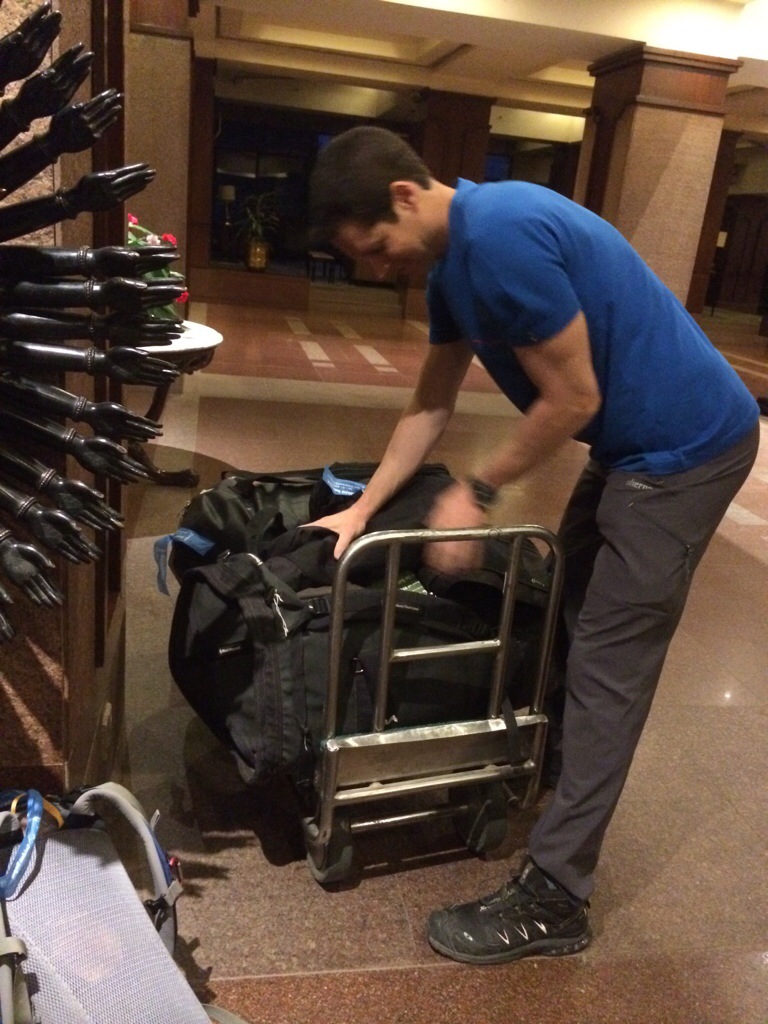
Getting ready to leave the comforts of the Yak & Yeti and head to the airport for our flight to Lukla and the start of our trekking!
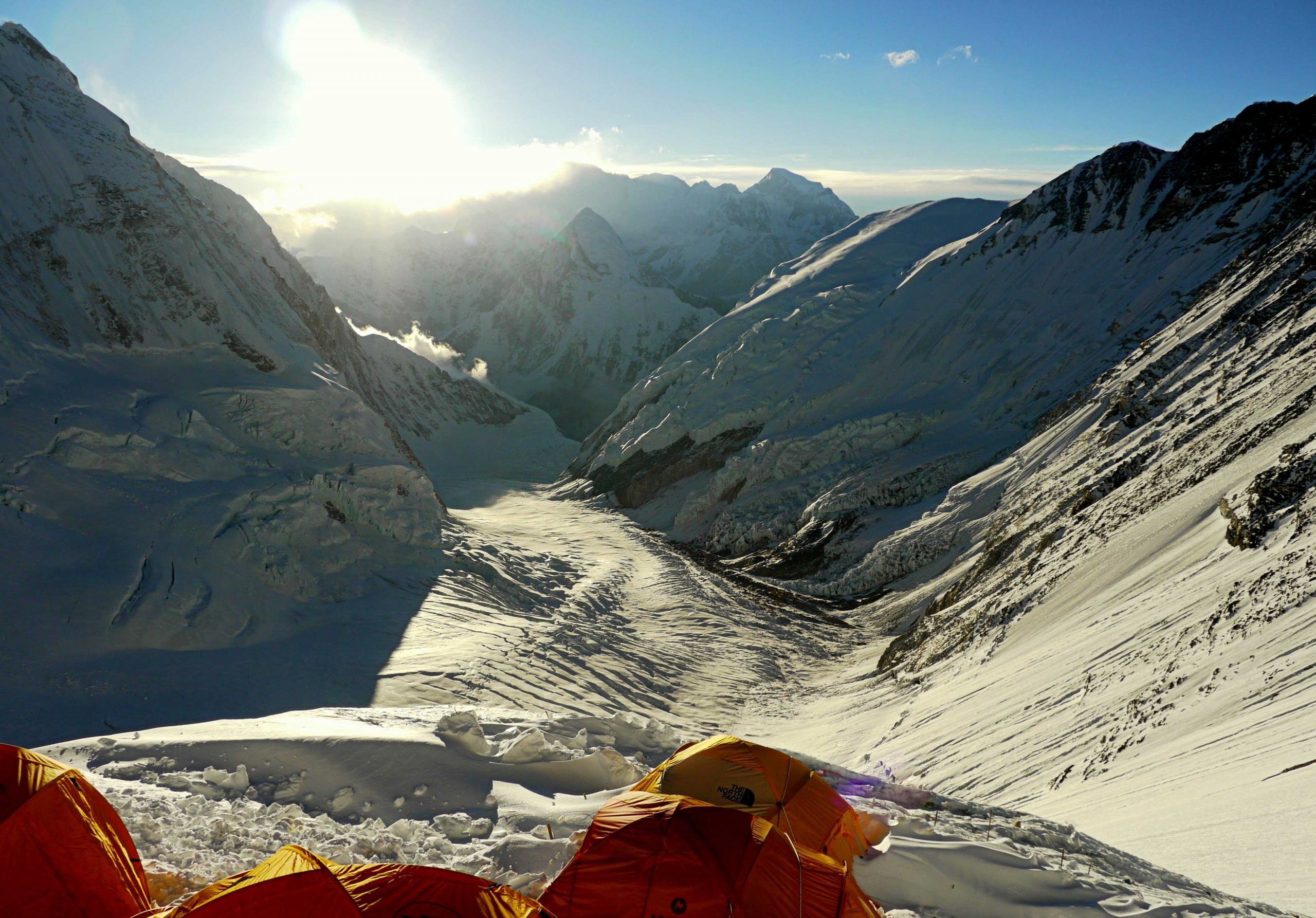
Special Environmental Restoration Expedition: A sponsored environmental restoration effort will run concurrent with our Apr. 13 – May 25 treks and climbs – and include visiting Sagarmatha Next, an art and experience center that strives to promote sustainable tourism by changing the perception around waste. Join us for this special opportunity to give back and build lasting relationships in the Everest region of Nepal! Cleanup participation is optional.
Mount Everest, known by the Nepalese / Sherpas as Sagarmatha and by the Tibetans as Chomolungma, is the world’s highest peak at 8848m (29,029 ft) and is the border between Nepal and Tibet. Since the 1920s, many of the world’s top climbers have attempted to scale Mount Everest, and May 29, 1953, marked the first successful ascent by Tenzing Norgay (Nepal) and Sir Edmund Hillary (New Zealand). Madison Mountaineering offers the premier climbing experience on Mount Everest in regards to summit success, safety, and overall experience. Our teams work together, have fun, and form lasting bonds of friendship over the course of the expedition. Our camaraderie, as well as the very high level of support, sets us apart from the other teams, we often come to the aid of other climbers in distress. We achieve this with small teams, top guides & sherpas, a focus on safety and good decision making, an overall goal of summit success and making the ‘return trip,’ and enjoying the experience of Everest throughout the expedition.
Our Expedition Leader:
Expedition Leader and Guide on Mount Everest, Garrett Madison oversees all aspects of his teams related to planning, organization, and climbing on Mount Everest. One of the best known “Expedition Leaders” on Mount Everest with the highest success and safety record in recent years, Garrett has personally accompanied over 80 climbers (clients) up Mount Everest to the summit since 2009 (as well as many co guides and climbing Sherpas), more than any other guide or Expedition Leader. Garrett is known for “climber care,” making the well-being of his clients his number one priority; this is perhaps the most important differentiating factor in our expeditions compared to the others on Mount Everest. Garrett has recently climbed Mount Lhotse (4th highest mountain) a 5th time, guiding climbers on the “peak to peak” combination where members climb Mount Lhotse the day after reaching the top of Mount Everest. Garrett has been part of many “firsts” on Everest, such as the 2016 first ascent by an American with a prosthetic leg.
Our Everest Guides:
After his 18th expedition to Mount Everest (the last 16 years as “Expedition Leader”), Garrett Madison has reached the top 15 times. Garrett has personally guided more climbers to the summit (80) over the last ten years than any other mountain guide or Expedition Leader. Our Everest guide team includes very experienced mountain guides with multiple Everest summits, such as Terray Sylvester, Cacho Beiza, Benny Leiber, Brent Bishop, some of the most experienced and capable Everest guides on the mountain. This vast amount of organizational and logistical expertise, combined with a commitment to provide the best possible services to ensure safety and success, make Madison Mountaineering the premier boutique guiding company on Mount Everest. Climbers will have an unparalleled opportunity for safely climbing to the summit and returning to base camp, as well as climbing Lhotse if desired. Enjoying the experience is a high priority, and our climbers can attest to having a great time throughout (please contact us for past Everest climber testimonials)! Our teams are different than large-scale operations where climbers are locked into specific dates for rotations and summit attempts, and may be one of many people sitting down to eat in the dining tent, or dealing with illness spreading throughout the group. Often these large groups have only a leader who remains in base camp and to coach members over the radio, while with our team your leader climbs with you to the summit and back, often making the crucial “mission critical” decisions on the spot, this is a big part of our high level of success and safety. By keeping our team small yet highly supported, we don’t compromise our standards in providing the best strategy, flexibility, and resources needed to succeed in the dynamic environment of Mount Everest. The equation for success and safety involves variables that can and often rapidly change such as: weather (wind speed, precipitation, temperature), acclimatization and health, climbing route (the route often changes daily through the Khumbu Icefall), and other climbers and teams (climbers needing assistance, evacuation, as well as periodic overcrowding on the route).
We can quickly adjust to changing conditions better than any other team. We have the best communication systems available to monitor the weather (along with a dedicated meteorologists), to communicate with other teams on the mountain to collaborate on the route, weather, rescues, and summit schedule. We have an experienced base camp manager, a menu plan developed by a certified nutritionist, and a helicopter available that can evacuate an injured or ill climber if necessary, from as high as Camp 3. Our Sherpas are among the finest and most respected on the mountain, as evidenced by our Sherpa team that fixed the ropes to the summit on in 2017, 2018, 2019 on Mount Everest and in 2023 & 2024 on Nuptse, as well as yearly rope fixing on K2. Being the only operator who successfully guided climbers to the summits of Everest, Lhotse, and Nuptse the past 2 seasons. We are a team that works together to accomplish our common goals of safety, success, and having fun. If you would like to know more, we invite you to contact us!
Mount Everest is a harsh environment. We take pride in creating a team that can not only reach the top but can also get down safely and survive, all while having fun together. We are one of the few teams that has the ability to support climbers in distress who are high on Everest, commonly called the “death zone” which is above 8000 meters. Generally every season on the mountain, our team provides medical support to climbers in need at Camp 4, the South Col, and contributes to the survival of other climbers.
Everest 2025 Summary:
The 2025 Everest season was a remarkable success for Madison Mountaineering, with our team reaching the summit of Mount Everest on May 23 under challenging conditions. High winds turned many climbers around that day, but our team was well-prepared, fit, and supported by strong leadership and an exceptional Sherpa team. As a result, they climbed in uncrowded conditions and enjoyed the rare experience of having the top of the world largely to themselves.
Garrett reached the summit for the 15th time, further adding to his long record of leadership and success on Everest. The season also included several special achievements, including two Everest Express climbers reaching the summit in under one month and Susan Agar becoming the oldest American and British woman to summit Everest at 66.5 years old.
In total, the 2025 Everest team recorded 25 summits, including Garrett, eight international climbers, and our Nepal Sherpa team. The expedition also included success on Lhotse, continuing Madison Mountaineering’s strong record on the world’s highest peaks. We are proud of the climbers, guides, Sherpas, and support staff whose preparation, teamwork, and resilience made this such a memorable and successful season.
Everest 2024 Summary:
The 2024 Everest season was a compact, focused, and highly successful expedition for Madison Mountaineering. Our Mount Everest team achieved 100% summit success, with every climber who made the summit attempt reaching the highest point on Earth and returning safely. On May 23, the team gathered on the summit for photos, hugs, and high-fives before descending safely back to Camp 4 on the South Col.
This was a classic Madison Mountaineering Everest climb: small team, strong support, excellent Sherpa staff, experienced leadership, and the flexibility to take advantage of the right summit window. The team moved efficiently into position, reached Camp 4 in good style, and launched for the summit with favorable conditions and relatively few climbers on the route. Garrett reported a beautiful sunrise on the Southeast Ridge and a strong team effort from start to finish.
We are incredibly proud of our climbers, guides, Sherpas, and base camp staff for another safe and successful Everest season. As always, the summit was only half the climb; the true success was bringing everyone safely back down the mountain. The 2024 expedition reflected the values we bring to Everest every year: preparation, teamwork, good judgment, safety, success, and enjoying the experience together.
Everest 2023 Summary:
The 2023 season was one of Madison Mountaineering’s most successful and memorable Himalayan expeditions, with team members reaching the summits of Everest, Lhotse, and Nuptse. On Everest, our climbers summited on May 24 in what Garrett described as some of the best summit conditions he had ever experienced: warm, calm, and with hardly any other climbers on the route. The team had the summit to themselves for over an hour, a rare and special experience on the world’s highest mountain.
In total, eight clients, four guides, and 15 Nepal Sherpas reached the summit of Everest. The following day, three clients, two guides, and three Sherpas continued on to summit Lhotse, completing an excellent Everest/Lhotse combination. The expedition also included a successful ascent of Nuptse, making this a truly remarkable multi-peak season.
The season required patience and careful timing, including route management and flexibility during changing conditions. Our climbers, guides, Sherpas, and support staff worked together exceptionally well, and the result was a safe, smooth, and highly successful expedition. We are proud to have been one of the only teams to successfully guide climbers on Everest, Lhotse, and Nuptse in the same season.
Everest 2022 Summary:
The 2022 Everest season was an outstanding success for Madison Mountaineering. Our main Everest team reached the summit on May 20, 2022, between approximately 7:00 and 8:00 AM Nepal time, with all nine clients, four guides, and our Sherpa team standing on top of the world together. A few days earlier, our first team had also reached the summit on May 15, marking a strong start to the season’s summit period.
The climb unfolded with excellent teamwork, careful preparation, and strong support throughout the mountain. From acclimatization and rotations to the summit push itself, the team moved well and made the most of favorable conditions. After Everest, our Lhotse team continued on and successfully reached the summit of Lhotse on May 21, completing an impressive Everest/Lhotse expedition.
We are especially grateful to our climbing Sherpas, guides, base camp staff, and support team, whose hard work made the season possible. Everest is never easy, and every successful expedition requires planning, flexibility, patience, and trust. The 2022 season reflected the best of Madison Mountaineering: strong climbers, experienced guides, exceptional Sherpa support, good decision-making, and a shared commitment to reaching the summit and returning safely.
Everest 2021 Summary:
The 2021 Everest season marked a strong and meaningful return to the mountain after the cancelled 2020 season. Despite the continued challenges of the pandemic, difficult weather, and a complex operating environment, our team remained focused, flexible, and committed to the climb. Through patience, teamwork, and excellent support from our guides and Sherpa team, Madison Mountaineering achieved a safe and successful expedition.
This was a memorable year for several reasons. Arthur Muir, at 75 years young, became the oldest American to summit Mount Everest, an extraordinary achievement that inspired the entire team. Kristin Harila also completed an impressive Everest and Lhotse combination, reaching the summit of Everest at sunrise and Lhotse later the same day.
Most importantly, everyone made it off the mountain safely. That is always the true measure of success on Everest. Our climbers, guides, Sherpas, and support staff worked together through the uncertainty of the season and accomplished what we came to do. We are incredibly proud of the team’s perseverance, positive attitude, and trust in the process. The 2021 expedition was a powerful reminder of why Madison Mountaineering’s small-team approach, experienced leadership, and strong Sherpa support are so important on the world’s highest peak.
Everest 2020 Summary:
The 2020 Everest season was unlike any other. Our annual spring expedition was scheduled to begin in April, with climbers preparing to gather in Kathmandu before trekking through the Khumbu Valley toward Everest Base Camp. As the COVID-19 pandemic spread globally, Nepal officially cancelled all spring climbing expeditions, bringing the season to a close before our team could arrive on the mountain.
Although we were disappointed not to climb, the decision was clearly necessary for the safety of climbers, staff, local communities, and the broader mountain community. With the spring season cancelled, our focus shifted to supporting the people in Nepal who make Everest expeditions possible: Sherpas, porters, cooks, base camp staff, and logistics teams whose livelihoods depend heavily on the climbing season. We encouraged our community to support our Nepal staff through a GoFundMe campaign and remained connected to Everest through Alan Arnette’s Virtual Everest 2020 coverage.
While no summit was attempted, the 2020 season reinforced what matters most: community, responsibility, and taking care of the people who support every Madison Mountaineering expedition. We looked forward to returning to Everest when it was safe to climb again.
Everest 2019 Autumn Summary:
Our autumn 2019 Everest expedition was a meaningful journey in the Himalaya, even though conditions ultimately prevented a summit attempt. The team trekked to Everest Base Camp, settled into the rhythm of expedition life, and spent valuable time experiencing the mountain, Sherpa culture, and the beauty of the Khumbu. However, a massive hanging serac above the Khumbu Icefall created unacceptable risk on the route. After continued observation, discussion, and assessment, Garrett made the decision to end the expedition due to unsafe route conditions.
While it is always difficult to walk away from a major objective, this was the right call. Everest demands patience, humility, and disciplined decision-making, and our priority is always the safety of our climbers, guides, Sherpas, and staff. The team remained positive throughout the expedition, enjoying time together at Base Camp and building friendships along the way. We are grateful to Mountain Hardwear, our Sherpa team, staff, and climbers for their trust and professionalism. Though the mountain did not allow safe passage this season, the expedition was a valuable reminder that good judgment is one of the most important measures of success on Everest.
Everest 2019 Spring Summary:
Congratulations to our Everest 2019 spring team in successfully climbing the world’s highest peak, but more importantly making it down safely! In contrast to what the media has portrayed, our experience on summit day was a pleasant one, due to a strong and experienced team. Our guides and Sherpas not only installed the fixed lines to the summit, which ‘opened’ the route on May 14th for all climbers on the south side of the mountain but also supported our climbers in a seamless climb of Mount Everest. The challenge of climbing Everest, coupled with the added uncertainty of the weather and other climbers on the route, can create adverse conditions. However, our team of professionals orchestrated a perfect expedition under the circumstances.
In my 17 expeditions to Everest, this was one of the finest teams of hard-working, competent, positive, and pleasant Nepal “Sherpas”, many of who I have climbed with for the last 5 years. Big thanks for these incredible guys who helped us make our extraordinary success possible!
Everest 2018 Recap, “The Leader” on Everest
I am very pleased to report that our team had 100% success and safety with all climbers who embarked on the summit attempt from Everest base camp reaching the top between May 14 and May 18. Our small private teams (Kenton Cool’s group with Ben Fogel & Mark Fisher, the team of Ant Middleton & Ed Wardle) along and our main team of climbers all succeeded in the endeavor of climbing to the top of Everest and descending safely. We also had climbers complete the Everest and Lhotse combination climb, going from the summit of Mount Everest to the summit of Mount Lhotse the next day, altogether 42 climbers from our group (climbers and Sherpas) reached the summit of Mount Everest. As in previous Everest seasons, there were no injuries or accidents among our climbing team. We were supported by our incredible team of Sherpas who are an integral part of our success. Once again, as in the past 2017, season our team “led the way” by fixing the lines to the summit of Mount Everest, thereby opening the route for all teams to climb Mount Everest.
Most Successful Everest Season Ever?
This season on Mount Everest is likely the most successful ever, given the number of collective summits versus permits issued and taking into account overall accidents/fatalities. Two reasons can explain this very high level of success, the fact that our rope fixing team opened the route earlier than in previous Everest seasons and because a period of very good weather then manifest which allowed climbers to take advantage of the open route and good mountain conditions to climb. Because our rope fixing project was on time and well communicated with teams in Everest base camp, climbers were able to plan and prepare for summit attempts in advance of the good weather that materialized May 13th onward. Our rope fixing team had to work hard, despite unfavorable conditions in April and early May such as a very icy Lhotse Face combined with high winds, our team was still able to fix the ropes to the summit of Mount Everest by May 13th, with double lines in places to ease congestion on the Lhotse Face up to Camp 3, the Yellow Band, and on the Geneva Spur. The rope used was 10.5 mm static rope, a very strong and durable rope, the anchors (primarily Black Diamond 22 cm ice screws) were placed appropriately to support many climbers.
The small number of accidents/fatalities this season was unfortunate but on average less than what we normally see on Everest. Generally, there are some accidents/fatalities related to climbers getting stuck up high on Everest in bad weather or on a very crowded summit day and then running out of oxygen (I was witness to this in 2012 when 4 climbers perished up high on Everest because the rope fixing was delayed to May 18th and few good weather days were available). Because the weather window was favorable, climbers were able to spread out summit attempts over a week-long period, so that no single day was problematic from a congestion standpoint. Additionally, because our rope fixing project was well planned and executed on schedule, climbers were able to take advantage of the good weather window by making plans in advance of the arrival of this stable weather period.
Looking Forward
The rope fixing project this year was coordinated by my team, Adventure Consultants and our local operator in Nepal, Himalayan Guides. Initially, there was some contention from other teams that this was a good idea, as traditionally the rope fixing project was managed by the ‘old guard’ on Everest and the work shared by many teams. However, the challenge of managing members from many teams often led to some confusion regarding workdays and lost efficiency when Sherpas from different teams worked together for the first time. Our approach, keeping the project contained within essentially one team, provided us the opportunity to utilize our most capable high altitude Sherpas to complete this difficult project in an efficient and safe manner. Myself and Guy Cotter (CEO of Adventure Consultants) both climbed Mount Everest & Mount Lhotse this season, so we were able to actually be on the mountain to oversee and inspect various aspects of the rope fixing project ourselves in real-time rather than manage from Everest base camp as was traditionally the case by the teams in charge. I believe this “hands-on” approach by the leadership influenced the rope fixing project in a very positive manner, evident by the outcome. I hope this example, where the end result is safer and more successful climbing on the world’s highest mountain, can be carried forward to future seasons on Mount Everest!
— Garrett Madison
2017: Highest Success & Safety Two Years Running:
Our 2017 Mount Everest Expedition was again a fantastic success, with 100% of our 8 clients who reached Camp 2 making the summit of Everest on May 21st and May 23rd, along with 4 American guides, and 15 Sherpas!! We also were the only company that had several of our climbers complete the Everest & Lhotse “peak to peak” combination, where they climbed Mount Lhotse (4th highest mountain) the day after reaching the summit of Mount Everest. This amazing and unmatched level of success among all the teams on Mount Everest is secondary to our number one priority, that all members (clients, guides, & Sherpas) made it safely off the peak.
Rope Fixing to the Summit:
Our team took the lead in partnership with the British – Nepal Gurkha team in fixing the ropes to the summit of Mount Everest on May 15th, 2017. This was not part of our original plan, as the rope-fixing project was taken upon by several other teams at the start of the season. Unfortunately, after several mishaps, the lead team had to abandon the rope-fixing project along with their partners. Without any clear consensus on how or when the lines would be put-in to the summit, our team stepped up to finish the job. This “mission critical” project was necessary so that teams could begin their summit attempts on Mount Everest, with teams reaching the summit the following day on May 16th and continuing to reach the summit as late as May 28th. We are glad that our team had the capability and prowess to organize and execute such an important task, when no other teams on the mountain could summon such an effort, at such a critical stage in the climbing season.
Rescues:
Our team was at the South Col when several climbers who had pushed themselves very hard on summit day returned and needed critical medical attention. Our guides came to assist with medicine (dexamethasone, etc) and supplemental oxygen. However, what stands out the most is that one of our veteran guides, Brent Bishop, along with our Sherpas, rescued the Slovak Climber from the Balcony (27,500’), lowering him all the way down to the South Col high camp. We gave oxygen for him to use on the descent. This heroic effort by Brent and our Sherpas involved abandoning their own summit attempt, just hours away from the top, and spending the day giving their all in an effort to save a life.
We feel very fortunate that our expedition was a stunning success. We attribute this to our careful team selection and training, our top-notch and very experienced Everest guides and leadership, and of course our incredible Sherpa team who we invest heavily in year after year.
2016 Expedition Recap:
100% of our 2016 Everest Climbers reached the summit, of those that embarked on the summit attempt a total of 27 climbers (clients, guides and sherpas) reached the top of the world on May 19th, 2016!!
Mount Everest
– Asia 8,848.86m / 29,032ft.

As Expedition Leader and Guide for 18 years running, Garrett Madison has overseen all aspects for his teams related to planning, organization, and climbing on Everest/Lhotse. As one of the best known “Expedition Leaders” on Everest/Lhotse, Garrett has personally accompanied 90+ climbers (clients) to the summit over the last 11 years (as well as many co guides and climbing Sherpas), and 4 to the summit of Lhotse, more than any other American. Garrett has recently climbed Lhotse (4th highest mountain) five times, in guiding climbers on the “peak to peak” combination in under 24 hours.
Mt. Everest, known by the Nepalese/Sherpas as Sagarmatha and by the Tibetans as Chomolungma, is the world’s highest peak at 29,035’ (8850m) and is the border between Nepal and Tibet. Since the 1920s, many of the world’s top climbers have attempted to scale Everest, and May 29th, 1953 marked the first successful ascent by Tenzing Norgay (Nepal) and Sir Edmund Hillary (New Zealand). Madison Mountaineering offers an unparalleled opportunity to climb Everest with small teams, top guides/Sherpas, and a focus on safety, summit success, and enjoying the experience of Everest throughout the expedition.
Now leading his 19th expedition to Everest, Garrett Madison has reached the top 15 times (once per expedition), a very rare if not unmatched record for a guide. Garrett has personally guided more climbers (90+) over the last 11 years than any other American mountain guide. This vast amount of organizational and logistical experience, combined with a commitment to provide the best possible services to ensure safety and success, make Madison Mountaineering the premier boutique guiding company on Everest. Enjoying the experience is a high priority, and our climbers can attest to having a great time throughout!
Our teams are different than the large scale operations where climbers are slotted into specific dates for rotations and summit attempts and maybe one of many people sitting down to eat in the dining tent, or dealing with illness spreading throughout the group. Often these large groups have only a leader who remains in base camp, while with our team your leader climbs with you to the summit. By keeping our team small yet highly supported, we don’t compromise our standards in providing the best strategy, flexibility, and resources needed to succeed in the dynamic environment that is Everest. The equation for success and safety involves variables that can and often rapidly change such as:
- Weather (wind speed, precipitation, temperature)
- Acclimatization and health
- Climbing route (the route often changes daily through the Khumbu Icefall)
- Other climbers and teams (climbers needing assistance, evacuation, as well as periodic overcrowding on the route) Some teams now bring over 100+ Climbers and Sherpas, hardly an intimate experience!
We can quickly adjust to changing conditions better than any other team. We have the best communication systems available to monitor the weather (along with a dedicated meteorologist), to communicate with other teams on the mountain to collaborate on the route, weather, rescues, and summit schedule. We have an experienced base camp manager, a menu plan developed by a certified nutritionist, and a helicopter available that can evacuate an injured or ill climber if necessary from as high as Camp 3. Our Sherpas are among the finest and most respected on the mountain. We are a team that works together to accomplish our common goals of safety, success, and having fun. If you would like to know more, we invite you to contact us!
Lhotse
– Nepal, Asia 8,516m / 27,940ft.

Special Environmental Restoration Trek: A sponsored environmental restoration effort will run concurrent with our Apr. 13 – 28 treks and climbs – and include visiting Sagarmatha Next, an art and experience center that strives to promote sustainable tourism by changing the perception around waste. Join us for this special opportunity to give back and build lasting relationships in the Everest region of Nepal! Cleanup participation is optional.
Trekking through the Khumbu Valley to Everest base camp is a life-changing experience for many, as the spectacular mountain scenery integrated with Sherpa culture and Buddhist religion makes for a truly engaging combination. We follow the same route to Base Camp as the Everest climbers and recount the historical ascents with the climbers who share our lodges along the way. We have the option to climb Island Peak, a beautiful glaciated climb at 20,350’. This is a great introduction to Himalayan climbing, as the terrain and climbing techniques resemble that of the nearby peaks of Everest and Lhotse.
You might also want to consider these similar expeditions:
Everest Base Camp Trek
– Nepal, Asia
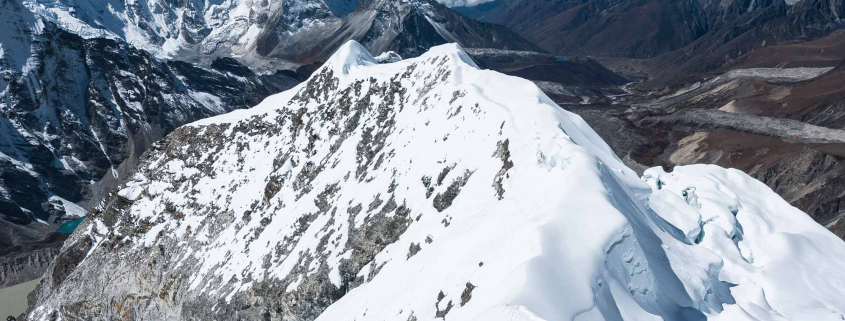
Island Peak, a beautiful glaciated climb at 20,305’, is a great introduction to Himalayan climbing, as the terrain and climbing techniques resemble that of the nearby peaks of Everest and Lhotse. Trekking through the Khumbu Valley to Everest base camp is a life-changing experience for many, as the spectacular mountain scenery integrated with Sherpa culture and Buddhist religion makes for truly engaging combination. We follow the same route to Base Camp as the Everest climbers and recount the historical ascents with the climbers who share our lodges along the way.
You might also want to consider these similar expeditions:
Island Peak
– Nepal, Asia 6,189m / 20,305ft.

The last of our food & oxygen packing in Kathmandu (KTM)!